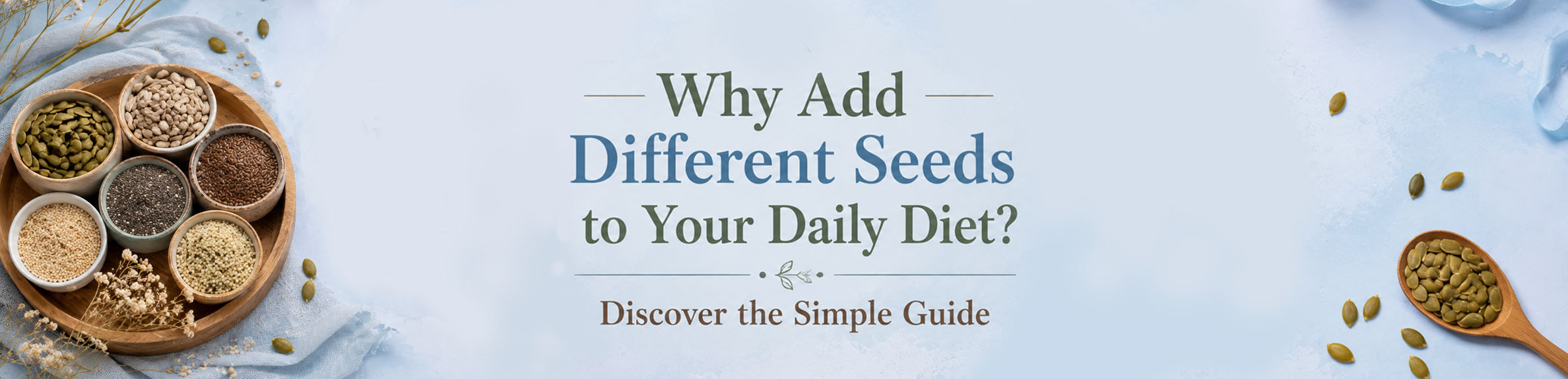
Seeds may be tiny, but they can add impressive nutritional value to everyday meals. Chia, flax, pumpkin, sunflower, sesame, and hemp seeds contain different combinations of fibre, plant protein, healthy fats, vitamins, minerals, and antioxidants. Including a variety of seeds in your diet can therefore be a simple way to make meals more nutritious without dramatically changing what you eat. Health experts generally recommend viewing seeds as part of an overall balanced eating pattern rather than relying on any single “superfood.”
Whether you sprinkle them over breakfast, blend them into smoothies, add them to salads, or enjoy them with dry fruits, seeds are easy to include in a busy routine. If you are already exploring dry fruits online, adding a selection of quality seeds can make your everyday snack choices more varied and wholesome.
Why Should You Add Different Seeds to Your Daily Diet?
Different seeds offer different nutritional strengths. Instead of depending on just one type, combining several varieties can help you enjoy a broader range of nutrients.
Seeds can provide:
- Dietary fibre that contributes to a balanced diet
- Plant-based protein
- Unsaturated fats, including plant-based omega-3 fatty acids
- Minerals such as magnesium, calcium, zinc and phosphorus
- Antioxidant compounds and other plant nutrients
For example, chia and flax seeds are notable sources of alpha-linolenic acid (ALA), a plant-based omega-3 fat, while pumpkin and sunflower seeds offer other valuable nutrients.
6 Popular Seeds to Include in Your Diet
1. Chia Seeds
Chia seeds are particularly rich in fibre and also provide protein, calcium, phosphorus, zinc and ALA omega-3 fats. Two tablespoons provide about 11 grams of fibre, making them an easy addition to a fibre-rich meal plan.
You can soak chia seeds and add them to smoothies, yoghurt or overnight oats. They also work well in puddings and homemade snacks.
2. Flax Seeds
Flax seeds contain fibre, protein, healthy fats and lignans, which are plant compounds with antioxidant properties. They are also a useful source of ALA omega-3 fatty acids.
Ground flax seeds can be mixed into oatmeal, smoothies, atta-based recipes or yoghurt. Grinding them can make their nutrients easier to access than consuming whole flax seeds.
3. Pumpkin Seeds
Pumpkin seeds are a convenient source of plant protein, healthy fats and minerals such as magnesium and zinc. Their mild, nutty flavour makes them suitable for both sweet and savoury foods.
Try adding them to salads, soups, breakfast bowls or homemade trail mixes.
4. Sunflower Seeds
Sunflower seeds are known for their vitamin E content and provide healthy unsaturated fats, protein and minerals. They can add a pleasant crunch to meals without requiring complicated preparation.
Use them as a topping for salads, cereals or yoghurt, or combine them with dry fruits for a convenient snack.
5. Sesame Seeds
Sesame seeds are already familiar in many Indian kitchens. They can be used in chutneys, ladoos, stir-fries, vegetable preparations and baked foods.
They also contribute healthy fats, protein and minerals, making them a practical seed to include in a varied diet.
6. Hemp Seeds
Hemp seeds provide plant-based protein and healthy fats. Their soft texture and mild flavour make them easy to add to smoothies, yoghurt, porridge and salads.
Harvard Health notes that different nuts and seeds can complement each other nutritionally, which is one reason variety can be useful.
Seed Benefits: Why Variety Matters
The main advantage of adding different seeds is nutritional variety. Each seed has its own composition, so rotating or combining them can help you avoid depending on one food for all your nutritional needs.
Supports a Fibre-Rich Diet
Chia and flax are particularly useful when you want to increase the fibre content of meals. Fibre is an important part of a balanced eating pattern and can support normal digestive function.
Adds Healthy Fats
Seeds contain predominantly unsaturated fats. Flax and chia provide ALA, while other seeds offer different types of unsaturated fats.
Provides Plant-Based Protein
Seeds can contribute to daily protein intake, particularly when combined with other plant foods such as pulses, whole grains, nuts and legumes.
Makes Everyday Meals More Nutritious
You do not need elaborate recipes to use seeds. A spoonful added to an existing meal can improve its texture and nutritional profile while keeping preparation simple.
How to Add Seeds to Your Daily Routine
If you are new to seeds, start with small amounts and gradually introduce different varieties. Here are some easy ideas:
- Breakfast: Add chia or ground flax to oats, cereal or yoghurt.
- Smoothies: Blend chia, flax or hemp seeds with fruits and milk or yoghurt.
- Lunch: Sprinkle pumpkin or sunflower seeds over salads.
- Snacks: Combine seeds with nuts and dry fruits.
- Dinner: Add sesame or pumpkin seeds to vegetables, soups or grain bowls.
- Baking: Mix suitable seeds into homemade breads, muffins or energy bites.
Harvard Health suggests incorporating nuts and seeds into foods such as salads, sauces, vegetables, yoghurt and whole grains while keeping portions moderate.
Seeds and Dry Fruits: A Simple Everyday Combination
Seeds and dry fruits can complement each other in snacks because they offer different textures and nutritional profiles. Almonds, walnuts, raisins, dates and other dry fruits can be combined with pumpkin, sunflower or flax seeds to create a convenient homemade trail mix.
When looking for dry fruits online, check product information carefully and consider options that suit your dietary preferences. If convenience matters, dry fruits online shopping can make it easier to compare varieties and create a regular pantry supply.
Choosing the best dry fruits online does not necessarily mean selecting the most expensive option. Focus on freshness, quality, suitable packaging and clear product information.
What to Consider Before Eating Seeds Every Day
Although seeds can be nutritious, more is not always better. They are energy-dense foods, so portion size matters.
Keep these points in mind:
- Introduce high-fibre seeds gradually if your usual diet is low in fibre.
- Drink adequate fluids when increasing fibre intake.
- Store seeds properly to maintain freshness.
- Choose plain or minimally processed varieties when possible.
- Consider individual allergies or dietary restrictions.
- If you have a specific medical condition or have been advised to follow a restricted diet, consult a qualified healthcare professional.
The goal is not to consume every seed every day. A varied diet can include different seeds across the week based on your meals and preferences.
How to Choose Quality Seeds and Dry Fruits Online
If you prefer buy dry fruits online rather than visiting multiple stores, look beyond price alone. Check the ingredient details, packaging, storage instructions, expiry or best-before information and product descriptions.
For regular order dry fruits online purchases, choosing a reliable seller can also make it easier to maintain consistent quality and variety in your pantry.
Bestowals can be considered when you want a convenient way to explore dry fruits and complementary healthy snack options for your everyday routine.
Conclusion
Adding different seeds to your daily diet is a simple habit that can bring more variety to your meals. Chia, flax, pumpkin, sunflower, sesame and hemp seeds each offer their own combination of fibre, protein, healthy fats and essential nutrients. Rather than searching for one “best” seed, rotating different varieties can help create a more diverse eating pattern.
Pairing seeds with quality dry fruits can make nutritious snacking even more convenient. If you are planning dry fruits online shopping, explore options from Bestowals and choose products that fit naturally into your everyday meals.
Ready to make your snack routine more nutritious? Explore quality dry fruits and seed options with Bestowals today.
Frequently Asked Questions
1. Can I eat different seeds every day?
Yes, different seeds can be included in a balanced diet. The important point is to maintain reasonable portions and include a variety of other nutritious foods as well.
2. Which seeds are commonly added to daily meals?
Chia, flax, pumpkin, sunflower, sesame and hemp seeds are popular options. Each provides a different nutritional profile.
3. Should flax seeds be ground before eating?
Ground flax seeds are commonly recommended because grinding can make their nutrients easier to access than consuming whole flax seeds.
4. Can I combine seeds with dry fruits?
Yes. Seeds and dry fruits can be combined to make a convenient snack or trail mix. Choose portions according to your overall dietary needs.
5. How can I add chia seeds to breakfast?
You can mix chia seeds into yoghurt, oatmeal, smoothies or overnight oats. They can also be soaked in liquid to create a pudding-like texture.